
A math game for my kids.

I wanted my kids to see the beauty of math, to think with it, almost like an art. I also wanted to make a game they would enjoy playing.

They already liked catching creatures, building a home, and winning with a squad. Those interests gave us a place to begin. We spent time thinking about how the mathematics could belong in a world they wanted to be part of.

Then we played. Fifteen questions in a sitting wore them out. One of my kids wanted to stop when the heading said “Operations & algebra.” She kept going for Lamplet.

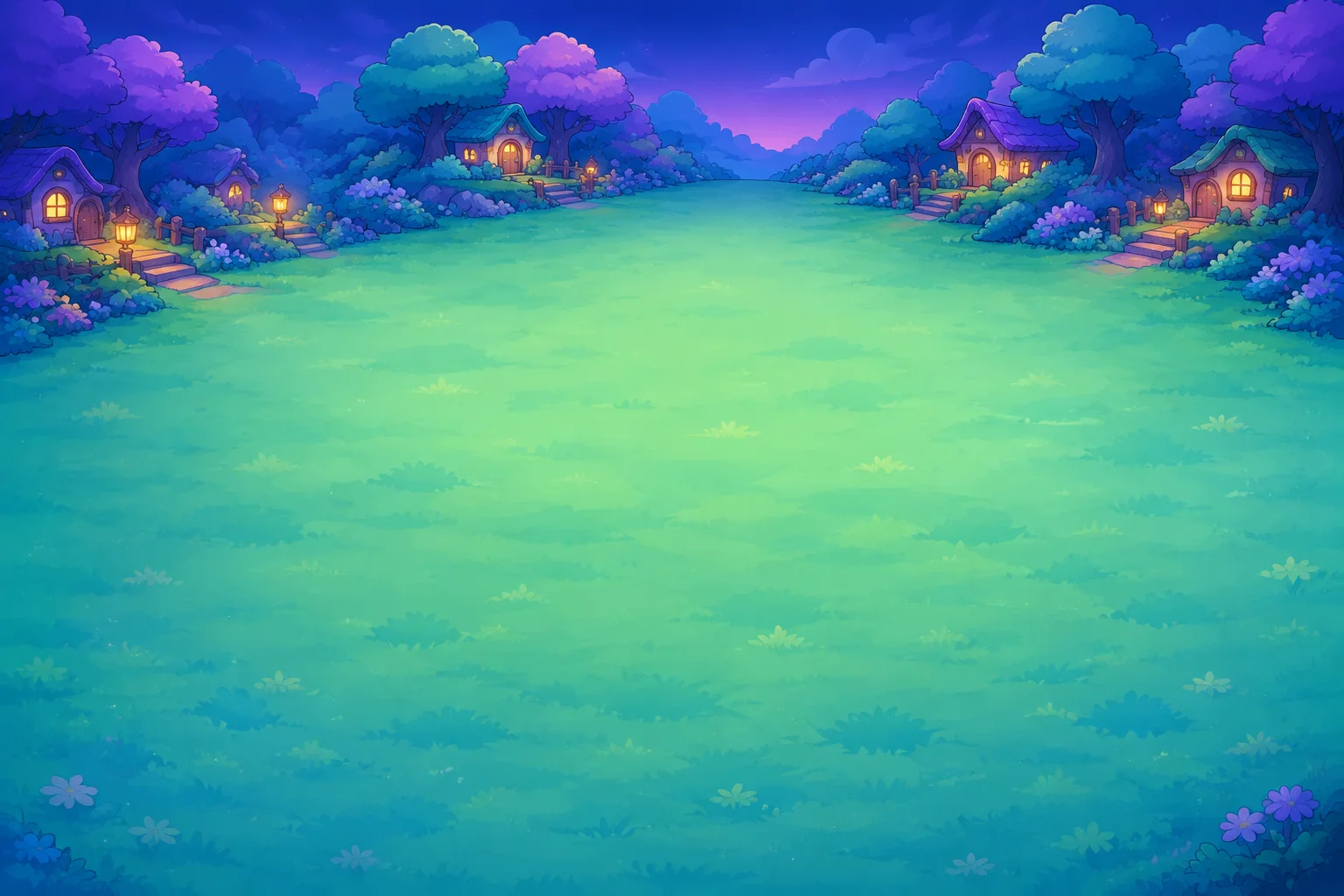
The Times Tower village: a clearing surrounded by trees and warmly lit cottages.Lamplet, a small orange creature with a glowing belly.
That's Lamplet. The village and creatures are part of the world we're building.

Times Tower is the math world inside Tiny Rivals. I build it with Claude and Codex, with my family helping us understand what the experience feels like to play.

The home screen became a village, with a creature to find and a home for the ones already caught. A question they found difficult could reveal a boss. We wanted the mathematics they had struggled with to become a challenge they were interested in returning to.

There is a different feeling in wanting to face a boss. The hope was that the game could give them a reason to approach a difficulty, and enough support to work through it.
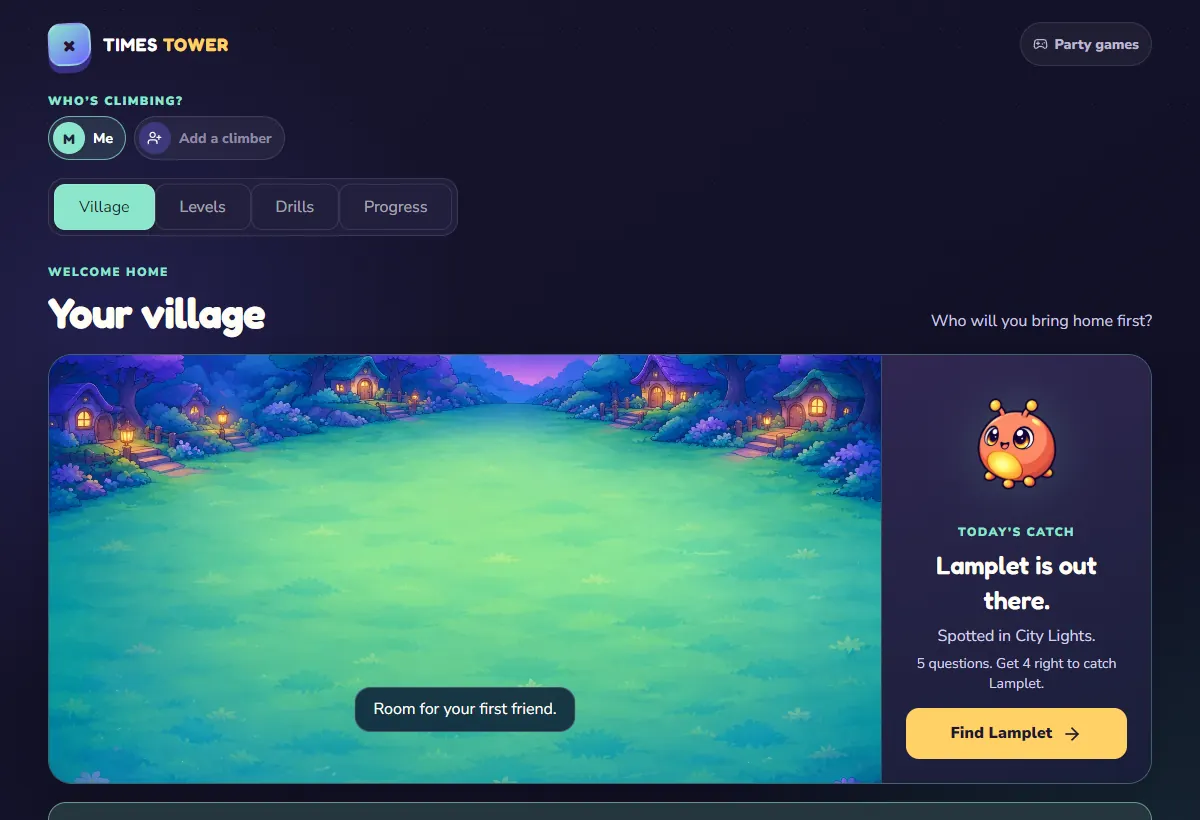
Actual Times Tower village screen, with an invitation to find Lamplet.

The game, September 2026.

The creature stays.

Once a boss is captured, the creature belongs to them. A fact can slip again later. I wanted them to be able to return to it without losing what they had earned.

So the game remembers two separate histories: the creature they caught, and the mathematics that may need another visit.

Lamplet remains happily in the collection.

A small example: you've earned this creature. What happens when you miss a fact?

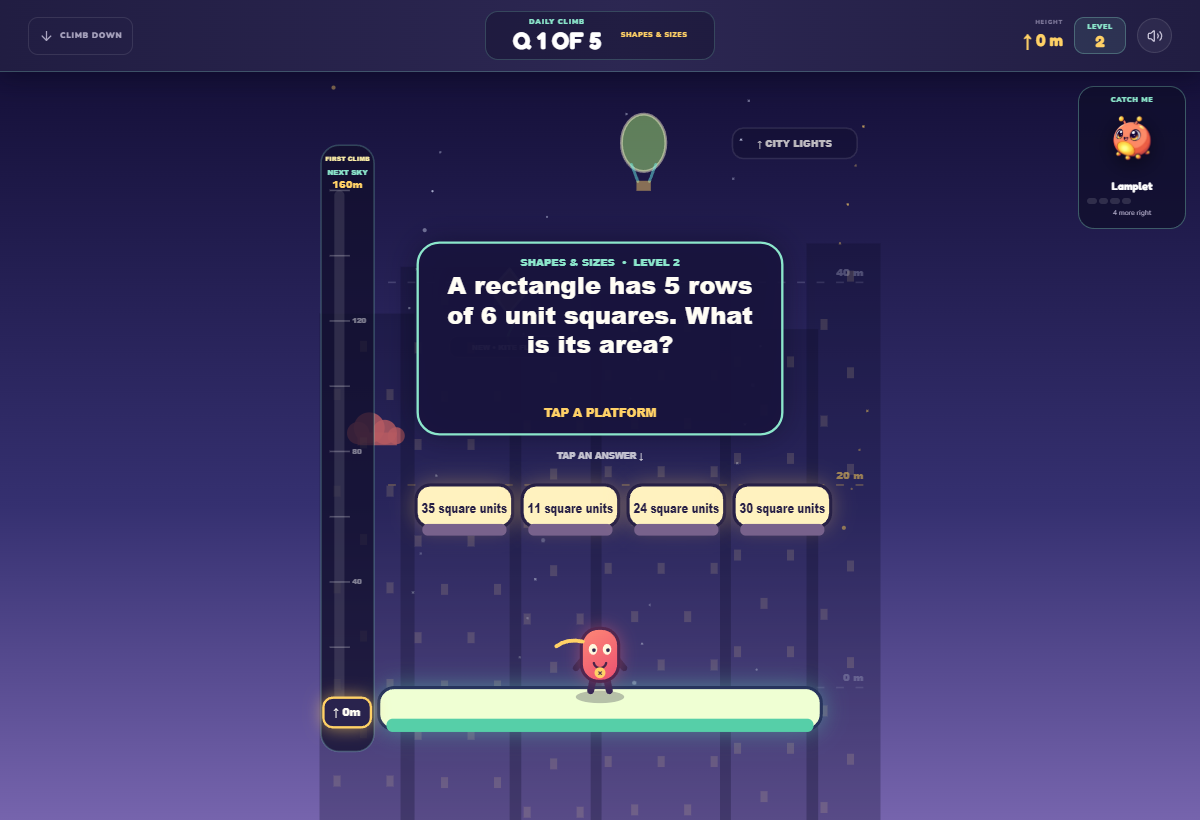
That also made us think about what an answer tells us. Choosing from a set of platforms gives a child a way in. Producing an answer without those choices asks more of them. Remembering it after time away asks more again. The practice can change as they become familiar with a fact.

A closer look at the practice
During fact practice

Time to work it out

Answer platforms give the child a way in. There is no visible countdown. Taking time to think does not trigger a timed fall.

Response time informs the learning engine quietly.

What were we helping them understand?

When I asked Claude and Codex to argue through the design, we began to see how much of the experience was arranged around answering our questions. An explanation appeared after a mistake. A child who answered correctly could move on without ever meeting the idea.

We considered asking them to choose an explanation. But we would still be giving them the explanation we wanted them to choose. I wanted them to be able to explore an idea and begin to see it for themselves.

That led us to a garden. The amount of fence stays the same, but as you change its shape, the ground inside changes. You can keep one version beside another and begin to see why.

Same fence, different gardenA rectangle 3 units wide and 9 units tall encloses 27 squares with a perimeter of 24 units.3 units9
24 units of fence, whatever the shape.

27squares of ground

Slide slowly. The same fence can hold a different amount of ground.

The same fence can hold a different amount of ground. Moving it gives you a way to explore that before you know a formula for it.

This is a small version of the idea. In the game, she can pin gardens beside each other and choose which one belongs in her village. It doesn’t have to be the largest.

I’m still learning what makes this a world they want to return to, and what kind of understanding can grow there. A creature can give them a reason to face a difficult question. A garden can leave them with a question of their own.

What interests me is whether she comes back and changes it because she wants to find out more.

Elliott · September 2026

Sources and learning research

The design draws on retrieval practice and spacing. These studies inform the principles; they do not evaluate Tiny Rivals or validate its particular review schedule.

This account draws on the project's design notes, including the September 6 discussion with Claude and Codex, and observations from playing with my family. The screens were captured on September 8, 2026; the artwork comes from Times Tower. The small interactions here illustrate the decisions.